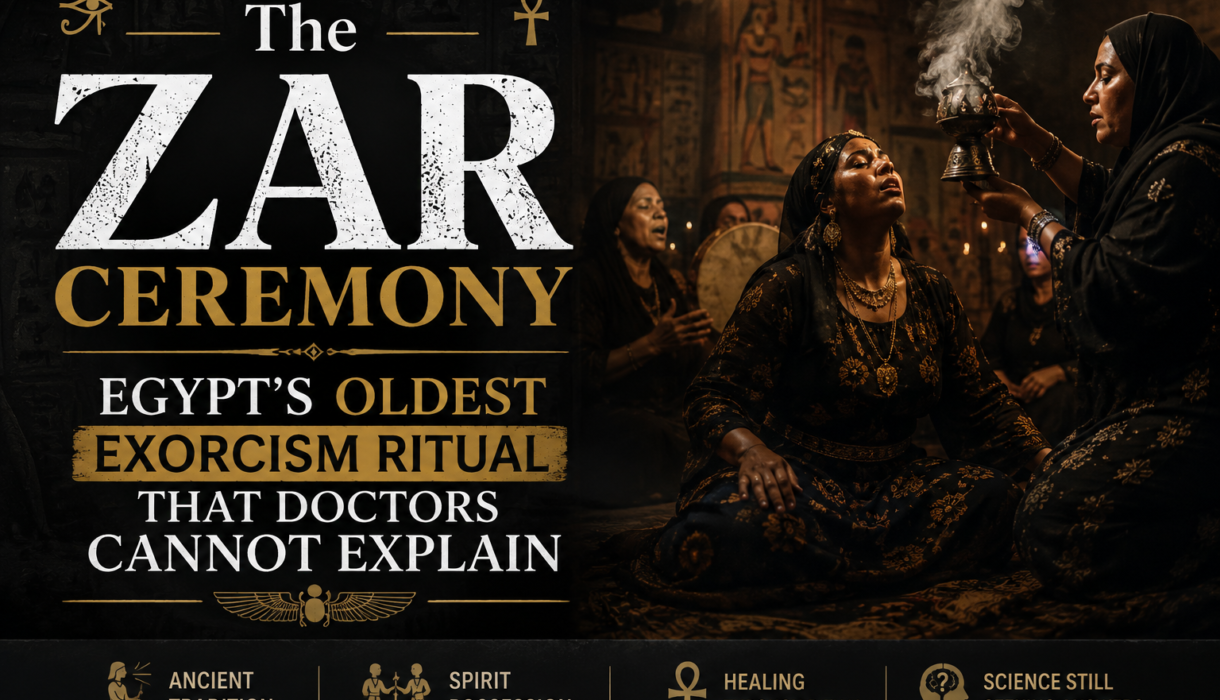

Deep within the historic quarters of Cairo, behind closed doors and away from mainstream sight, rhythmic drums beat to an ancient human impulse. This is the realm of the Zar ceremony, one of Egypt’s oldest surviving healing rituals. Frequently mischaracterized as a dark exorcism, the Zar is actually an elaborate communal practice designed to cleanse individuals of psychological distress and spiritual imbalance. Centuries after its inception, this ancient custom continues to intrigue sociologists, medical professionals, and cultural historians alike.
Ancient Roots and Spiritual Foundations
The origins of the Zar trace back through Horn of Africa and Nile Valley traditions, merging African belief systems with local Egyptian folklore over centuries. Unlike Western concepts of exorcism—which view spirits as purely evil entities that must be violently driven away—the Zar operates on a principle of peaceful negotiation. Participants believe that spirits, known locally as djinn or zār, possess human hosts not to harm them, but to communicate unmet needs. Consequently, the goal of the ceremony is reconciliation rather than expulsion.
The Dynamics of the Healing Ritual
Led by a senior female priestess known as the Kodia, the Zar is primarily a sanctuary for women, who historically faced severe social and emotional constraints. The ritual opens with incense burning, offerings, and rhythmic chanting accompanied by traditional instruments like the tanbura (a traditional lyre) and heavy frame drums (riqq). As the musical tempo accelerates, participants enter trance-like states, dancing vigorously to release pent-up emotional and spiritual energy. Through this cathartic physical expression, the afflicted person enters a dialogue with their spirit, fulfilling its symbolic requests to restore inner harmony.
The Medical Paradox and Psychological Impact
What continues to baffle modern medical practitioners is the undeniable therapeutic outcome often observed in participants. Many who suffer from chronic fatigue, severe anxiety, depression, or psychosomatic ailments report dramatic relief following a Zar gathering. While modern medicine relies on pharmaceutical intervention and clinical therapy, the Zar achieves profound psychological breakthroughs through expressive movement, music therapy, and intense social validation. Medical anthropologists often compare the ritual to modern group therapy, noting how the supportive atmosphere allows individuals to process deep trauma without fear of societal judgment.
Reconciliation Over Expulsion
The core philosophy of the Zar challenges conventional medical perspectives on mental illness and spiritual distress. Rather than framing internal struggle as a pathology to be erased, the ritual acknowledges pain as a voice that deserves to be heard. By treating the spirit with respect and negotiating its terms through music and movement, the individual regains a sense of personal agency and physical relief. This holistic integration of body, mind, and community creates a cathartic reset that standard clinical practices often struggle to replicate for culturally rooted conditions.
A Declining Cultural Legacy
Despite its historical resilience, the Zar ceremony faces an uncertain future in contemporary Egypt. Modernization, expanded access to Western healthcare, and religious pushback have driven the practice into near extinction, reducing it to a private, localized ritual or a preserved musical performance. However, its enduring legacy serves as a compelling reminder of humanity’s ancient understanding of the mind-body connection. The Zar remains a testament to the power of community, music, and tradition in healing the invisible wounds of the human condition.