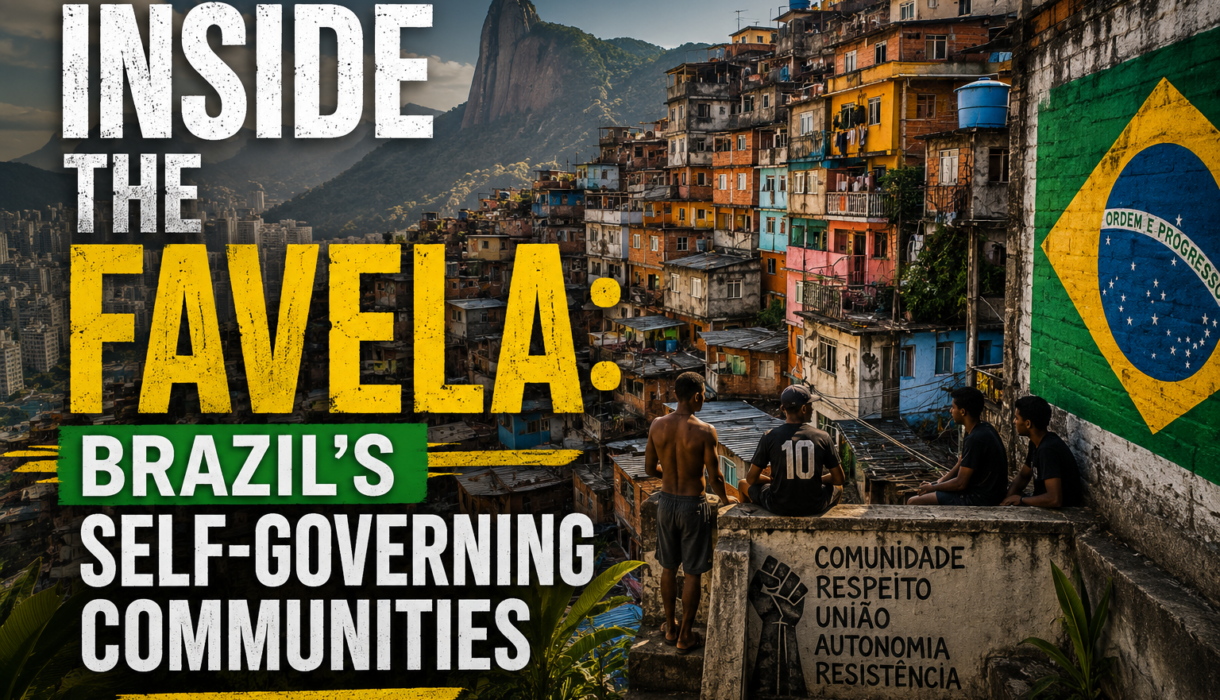

Brazil’s favelas—sprawling urban settlements clinging to the hillsides of Rio de Janeiro and São Paulo—are frequently misunderstood through the narrow lens of crime and poverty. In reality, these densely populated neighborhoods function as complex, highly organized micro-cities. Born out of historic government neglect and rapid urban migration, favelas have spent generations building their own parallel societal structures. From informal infrastructure to local commerce, these self-governing communities showcase remarkable human ingenuity, resilience, and adaptability in the face of structural isolation.
The Evolution of Organic Infrastructure
When public authorities historically failed to extend basic urban planning to the favelas, residents took community development into their own hands. Neighborhoods like Rocinha—Brazil’s largest favela—developed their own complex networks for housing, water distribution, and informal electricity grids. Houses are built incrementally over time using concrete blocks and brick, stacking upward to accommodate growing families. Through local resident associations (associações de moradores), community members establish their own informal mail delivery services, sanitation efforts, and transportation routes, effectively filling state-created vacuums.
Micro-Economies and Entrepreneurial Spirit
Far from being economically stagnant, favelas possess thriving internal marketplaces driven by hyper-local entrepreneurship. Small businesses—ranging from family-run bakeries and barber shops to localized tech hubs and rooftop restaurants—flourish within these winding alleys. Resident-led financial initiatives and neighborhood credit systems allow local business owners to secure capital despite lacking traditional bank access. This self-sustaining economic engine generates billions of reais annually, proving that favelas are vibrant commercial centers whose internal trade keeps thousands of families afloat.
Social Governance and Community Safety Net
In the absence of consistent municipal services, social order and solidarity within favelas are largely maintained through deep community ties. Non-governmental organizations, grass-roots youth clubs, and local religious groups act as informal governing bodies that provide social safety nets. These organizations offer after-school tutoring, medical assistance, and vocational training, preserving social cohesion. While non-state armed actors or local leadership often dictate safety rules in certain sectors, everyday governance relies heavily on mutual respect, communal accountability, and neighbors looking out for one another.
Cultural Engines Shaping Global Influence
Favela culture is one of Brazil’s most powerful exports, deeply shaping the country’s national identity and global footprint. Favelas are the birthplaces of iconic musical genres like Funk Carioca and traditional Samba, serving as centers for artistic innovation, street art, and dance. Today, young creators from these communities are transforming local storytelling into international fashion lines, digital media, and social activism. Rather than waiting for external validation or state intervention, Brazil’s favelas stand as a powerful testament to how human communities can construct fully functioning, self-governing worlds of their own.