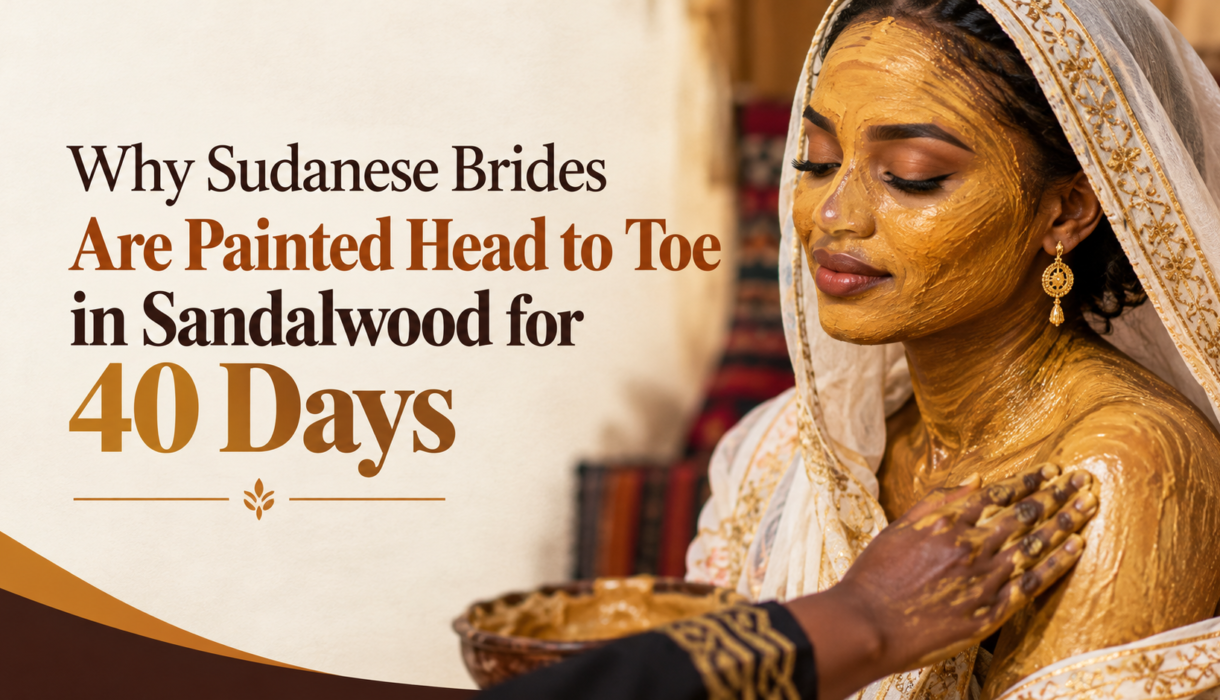

Bridal beauty rituals across the globe feature unique cultural practices, but few are as intensive, transformative, and deeply sacred as the preparation of a Sudanese bride. Weeks before walking down the aisle, a young woman steps completely out of public life to undergo a ancient multi-step transformation. At the absolute heart of this tradition is a process where the bride is coated from head to toe in thick pastes made of aromatic sandalwood and scented botanical mixtures, paired with a ritual smoke bath known as dukhan.
Far from being a mere cosmetic routine, this 40-day countdown is an honored cultural institution. It blends deep skincare, body detoxification, emotional preparation, and symbolic passage into womanhood. Understanding why Sudanese brides willingly undergo this lengthy, intensive process reveals a beautiful story of heritage, community, and feminine self-care.
The Ingredients: Sandalwood, Dilka, and Scented Pastes
The cornerstone of this bridal ritual relies heavily on dilka, a traditional Sudanese body scrub made from fermented grain flour, ground sandalwood, water, and rich fragrant spices. Sandalwood is prized throughout East Africa and the Middle East for its soothing, anti-inflammatory, and aromatic properties.
When mixed with essential oils, cloves, and perfumed preparations, this dense paste is applied generously across the bride’s entire body. The mixture acts as a heavy physical mask that sits on the skin to deeply cleanse pores, slough off dead skin cells, and leave behind a smooth, golden texture.
The Role of Dukhan: The Ancient Smoke Bath
The sandalwood and dilka application goes hand-in-hand with dukhan, which translates directly to “smoke” in Arabic. During dukhan, the bride disrobes, sits on a small stool or perforated chair over a clay pit filled with glowing coals, and burns scented woods—primarily acacia (talh) and aromatic sandalwood. She then wraps herself tightly in a heavy blanket, trapping the billowy, fragrant smoke against her skin.
The intense heat causes the bride to sweat profusely, opening her pores and allowing the rich, woodsy aromas to penetrate deep into her skin. The smoke reacts with the natural oils and the applied sandalwood paste, producing a distinct, warm bronze tint that acts like a natural, sun-kissed glow.
The 40-Day Retreat: Isolation and Rest
The duration of the ritual is what makes it truly extraordinary. For roughly 40 days leading up to the wedding day, the bride stays indoors and refrains from conventional water bathing. Instead, her skin is cleaned and maintained entirely through repeated applications of perfumed oils, sandalwood pastes, and daily smoke sessions.
By building up soot and paste layers over weeks, the skin undergoes an incredible transformation. On the 40th day, during the final reveal, the thick buildup is gently peeled and massaged off using fragrant oils. What emerges underneath is remarkably soft, glowing, deeply moisturized skin carrying a rich, woodsy scent that can last for weeks after the wedding.
A Sacred Rite of Passage into Womanhood
In Sudanese culture, dukhan and sandalwood treatments are strictly reserved for married women and brides-to-be. Unmarried young women are forbidden from participating in these smoke baths, making the 40-day pre-wedding period a major milestone. It visually and symbolically marks a young woman’s transition from girlhood into marriage and maturity.
During these 40 days, the bride is completely pampered by elder female relatives, mothers, aunts, and close friends. Free from household chores, work, or social obligations, the time serves as an emotional retreat where elder women pass down marital wisdom, advice, and ancestral support.
Physical Healing and Modern Cultural Pride
Beyond aesthetics, the intense heat and medicinal woods used in this tradition carry genuine therapeutic benefits. The deep heat helps soothe joint tension, relax muscles, and relieve the stress associated with planning a wedding. It functions as a complete body detox system refined over generations.
Today, even as Sudanese women move abroad or lead busy modern lives, they continue to uphold this timeless tradition. Whether using traditional clay pits or adapted modern setups, the 40-day sandalwood and smoke ritual remains a proud symbol of identity, connection to heritage, and ultimate bridal luxury.